Timber Depletion and Land Cost Basis: Bookkeeping for Mills That Harvest Their Own Logs
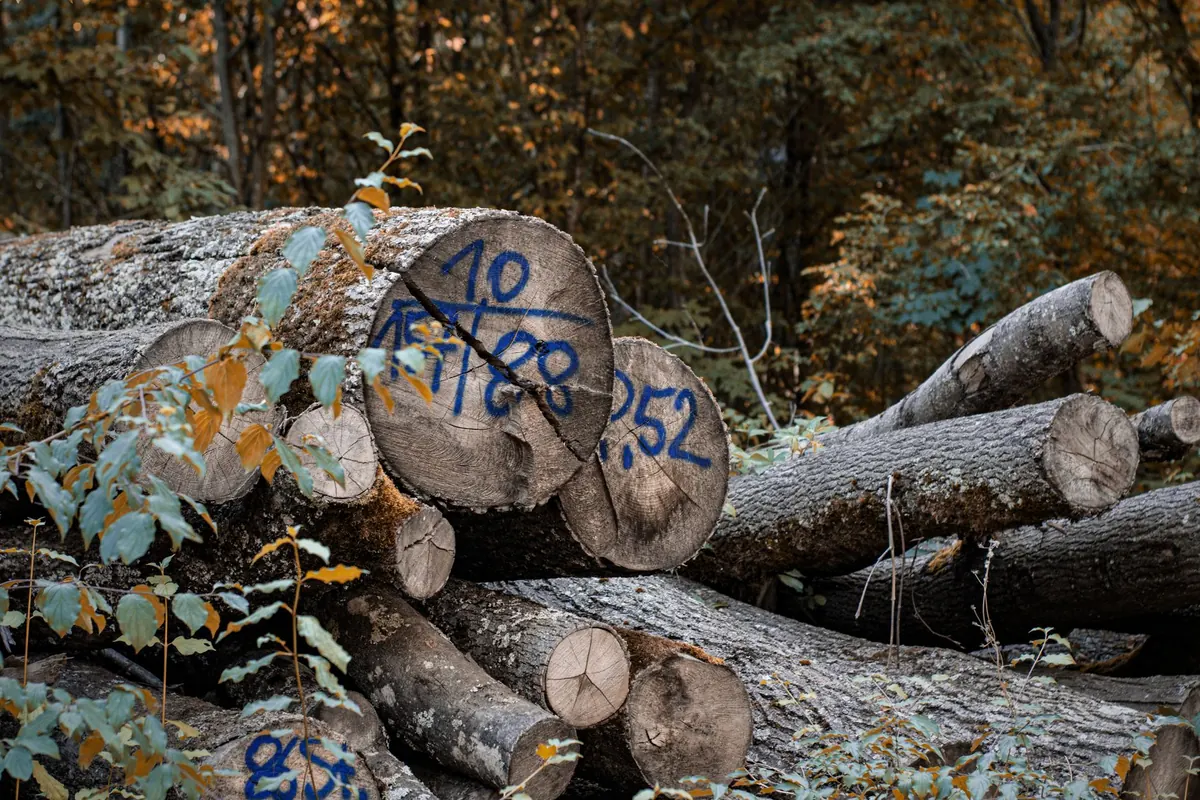
A mill that buys logs from a neighbor has an easy paper trail: scale ticket, invoice, check. Cut logs from ground you own and that trail goes quiet. Nobody sends a bill for the pine your crew just felled, so it is tempting to book the diesel, the wages, and the trucking and call the log cost done. The trouble is that the timber itself — usually the largest single piece of what a log costs — stays parked on the balance sheet while your lumber margins quietly flatter themselves.
Timber depletion is the mechanism that fixes this. It is the bookkeeping counterpart to a physical fact: you are converting a standing asset into inventory, one board at a time. Get it right and every load crossing your scale carries a defensible cost. Get it wrong and you are pricing lumber against a cost that omits the tree.
Two assets, two behaviors. Land you keep. Timber you consume. When you buy a tract, the purchase price covers both, and the accounting has to pull them apart — not for tidiness, but because the timber portion has to be recovered against the revenue from the logs it becomes.
For a sawmill, the stake is cost of goods sold. Your cost per thousand board feet should include what the standing timber cost you, or you cannot compare your own logs against bought logs, and you cannot judge whether a tract was worth buying. Miss depletion in a harvest month and profit looks better than it is, while the land account sits at a number that will never move.
There is a second cost to lumping the two together. Land does not deplete; it does not wear out, and it is never "used up" by a harvest. Timber does. Fold them into one account called timberland and the harvest year shows no tree cost at all, while the balance never reflects that a third of the volume is gone. Ten years and three cuttings later, the number on the books is fiction, and the fiction is expensive when you go to borrow against the ground or sell the tract.
At acquisition, allocate the purchase price among land, timber, and anything else in the deal — roads, bridges, buildings, rolling stock. A timber cruise tells you what volume you bought; a land appraisal, or comparable bare-land sales, tells you what the dirt is worth. Put timber value in the timber account, the remainder in land, and write the allocation down. An appraisal plus a cruise report in a permanent file answers questions years later that memory cannot.
Buy cutover ground and most of the value belongs to land, with a modest figure for scattered stems. Buy a mature stand and timber generally carries most of the price. Both are normal. Assigning everything to one bucket is not.
Say you pay $920,000 for 400 acres carrying an estimated 2,000 MBF of pine sawtimber. Comparable bare land in the county runs $1,400 an acre. That puts land at $560,000 ($1,400 × 400), leaving $360,000 for the timber. Your starting depletion rate is $180 per MBF ($360,000 ÷ 2,000 MBF). Everything else — the roads you build, the culverts, the equipment shed — gets allocated to its own account on its own depreciation schedule.
That single rate does a lot of work. It becomes the price your own crew pays for standing timber, and it is the number that makes an owned-log harvest comparable to a bought-log harvest on the same cost report.
Depreciation spreads a cost over time. Depletion spreads a cost over volume. It is a units-of-production calculation, and it moves only when you cut.
The core arithmetic: depletion rate = adjusted timber basis ÷ estimated remaining volume, and depletion expense = rate × volume harvested. Recompute the rate whenever the basis changes — a new addition, a new tract, a corrected cruise — or when a new cruise meaningfully changes the remaining volume. Harvest nothing in a year and depletion for that tract is zero, no matter what the calendar says.
You cannot know what your logs cost until you know what your timber cost. Depletion is the bridge between the two.
For a mill, depletion is not a single year-end adjustment; it is a transfer. When the crew fells timber, the cost leaves the timber account and lands in log inventory:
From there the cost travels with the wood. Logs sawn in the same period become cost of goods sold. Logs still on the yard at year-end stay in inventory. Lumber still on sticks stays in inventory too, carrying its share of the timber cost until it ships. That is why a mill that depletes correctly still needs log counts and lumber counts at period end — otherwise the cost simply jumps to the income statement early and the balance sheet empties out.
Later costs can add to basis as well. Reforestation, site preparation, seedlings, release spraying, and timber stand improvement generally increase the timber account rather than running through the income statement, which means they also change your depletion rate. Reforestation has its own provisions, and book treatment does not always match tax treatment. Confirm the posting with your accountant before you make the entry, and keep the reforestation receipts, the planting prescription, and the acreage maps with the tract file.
Not everything belongs in basis, though. Property taxes, insurance, and general overhead are period costs. A road built to reach a particular tract for one harvest is usually a better candidate for the timber or land account than for the fuel line on the P&L.
Once your owned logs carry a depletion cost, an honest comparison becomes possible. Lay the two side by side per MBF: stumpage-equivalent depletion, felling and bucking, skidding, loading, hauling, and road cost for your own wood; delivered log price for the neighbor's. Plenty of mills discover that their "cheap" own-ground logs cost more per MBF than the log buyer down the road — usually because the tract is small, the skid is long, or the volume per acre is thin. That is a finding worth having. The reverse finding — that a tract is carrying its weight and then some — is worth having too, and it is the argument for buying the next one.
Keep the cruise reports, the appraisals, the allocation memo, and a depletion schedule by tract showing beginning basis, additions, volume cut, rate applied, and ending basis. When the auditor, the lender, or the next generation asks what the timber is worth and what it has cost, the answer will be in the file.
Photo: Esmerald Heqimaj / Pexels
Previous Post
Seasonal Sawmill Payroll: Managing Temporary Logging and Milling Staff During Peak Season
Next Post
Fuel Surcharges and Delivery Fees on Mill Invoices: How to Calculate and Disclose Them